Momentum Policy and Advocacy Newsletter

A Note from the CEO…

Each July, Disability Pride Month gives us an opportunity to celebrate the strength, diversity, and contributions of the disability community while reflecting on the work that remains. It commemorates the signing of the Americans with Disabilities Act (ADA) in 1990—a landmark civil rights law that fundamentally changed our nation by recognizing that people with disabilities have the same rights, opportunities, and aspirations as everyone else.

For people with developmental disabilities, the ADA helped open doors that had too often been closed. It challenged discrimination, expanded access to education and employment, and affirmed that disability is a natural part of the human experience—not a reason for exclusion. It helped move our country away from segregation and toward community inclusion.

However, thirty-six years after the ADA became law, too many people with developmental disabilities continue to encounter barriers that prevent full participation in community life. At times these barriers are obvious such as the lack of a functionally accessible restroom or adult changing table. And at other times they are not the obvious physical obstacles that inspired the ADA’s earliest accessibility efforts. Instead, they are the everyday challenges of navigating systems that were never designed with all people in mind.

Functionally accessible communities are communities where people with developmental disabilities can realistically live, work, learn, travel, participate, and lead without encountering unnecessary barriers at every step. They are communities designed around inclusion rather than accommodation. They recognize that accessibility is not simply about removing obstacles after they are identified—it is about designing systems that work for everyone from the beginning.

This requires us to build upon the foundation established by the ADA. Now it is our responsibility to fulfill that vision by creating communities that are not simply compliant of law, but functionally accessible in practice – communities where every person, including those with developmental disabilities, can thrive, contribute, and belong.

That is the promise we should recommit ourselves to this Disability Pride Month. And it is a promise worth pursuing every day of the year.

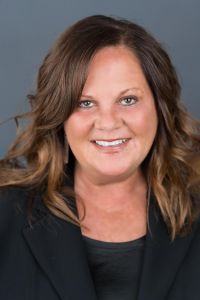
Lori Anderson, President & CEO 

Momentum’s VoterVoice Advocacy Center

Advocacy Contacts

Governor Gavin Newsom
Phone: (916) 445-2841
Fax: (916) 558-3160
Internet Contact Form Access – Here

X Accounts:
@GavinNewsom
@CAgovernor
Facebook:
@GavinNewsom

Find Your Representatives

U.S. House of Representatives
U.S. Senate
California State Legislature

California News


California Reaches FY2026-27 State Budget Deal

On June 30, California Governor Gavin Newsom signed AB109, the states FY2026-27 state budget. The agreement sets total expenditures at $351.7 billion for FY 2026-27, and reduces California’s long-term structural deficit by fifty percent.

In a compromise with the legislature, the budget keeps the current asset limit to qualify for Medi-Cal, California’s Medicaid system, at $130,000 for 2026-27 and lowers it to $21,000 for 2027-28. The Governor had lowered it to $2,000 effective July 1, 2026 in his original budget proposal.

The budget also contains many trailer bills which will impact Californian’s with disabilities and disability service providers. SB 168, the omnibus bill for the Department of Developmental

Services (DDS), contains the following provisions:

  • Requirement that DDS offer enhanced, ongoing technical assistance to service providers and use data collected during this year to evaluate barriers to obtaining the quality incentive program (QIP) rate. This language addresses the technical problems and administrative burden placed on providers working to comply with QIP reporting requirements.
  •  Provision of a time-limited extension of the use of remote services through December 31, 2028 with a requirement that utilization data to be shared with the Legislature to better inform appropriate permanent policy practices.
  • Elimination of the requirement that supported employment providers comply with the Commission on Accreditation of Rehabilitation Facilities (CARF) and establishes a requirement that regional centers monitor compliance with service standards established by the department.

The budget did not contain any funding for rate increases, leaving in place a roughly $2 billion gap between rates paid to disability service providers and the reported costs of providing those services. Advocacy efforts have already started to secure a rate increase in the California FY2027-28 state budget.

California Attorney General Joins Coalition in Challenging New Federal Guidance on Work Requirements for Medicaid Beneficiaries

California Attorney General (AG) Rob Bonta has joined AGs from 24 other states in filing legal challenge to the new federal Medicaid work requirements, arguing that they exceed federal authority and threaten access to essential health care for millions of Americans. The coalition contends that the requirements will create unnecessary administrative barriers that may cause eligible individuals to lose coverage—not because they are ineligible, but because they are unable to navigate complex reporting and documentation requirements.

Disability advocates are particularly concerns with a more restrictive requirement to qualify for a medical exemption of the work requirement. Previously individuals qualified for the exemption if they fell into five broad categories:

  • Blind or disabled
  • Physical, intellectual, or developmental disabilities
  • Disabling mental disorders
  • Chronic substance use disorders
  • Serious or complex medical conditions

However, the new CMS rule adds a functional capacity requirement. A diagnosis alone no longer guarantees an automatic exemption. Instead, enrollees must prove that their condition “significantly impairs” their physical or mental ability to meet the 80-hour monthly work or community engagement requirement. Essentially, CMS shifted the definition from a test of medical diagnosis to a test of work capacity, forcing individuals with serious illnesses to clear extra administrative hoops to prove they are too sick to work

For Californians with intellectual and developmental disabilities, the stakes are especially high. Although many people with significant disabilities are expected to qualify for exemptions from work requirements, experience from other states has shown that eligible individuals can still lose coverage because of paperwork errors, communication barriers, or difficulties proving their exempt status. Medi-Cal provides not only health care but also the long-term services and supports that enable people with disabilities to live, work, and participate in their communities. Interruptions in coverage can jeopardize access to personal care, therapies, employment supports, transportation, and other essential services.

A highlight of the report is AB 341 that requires the Department to contract with a public or private California dental school or college to administer the Oral Health for People with Disabilities Technical Assistance Center Program. The goal of the program is to improve dental care for people with intellectual and developmental disabilities by reducing or eliminating the need for sedation and general anesthesia during treatmentAnother highlight is AB 815 that will prevent insurance companies from labeling social services professionals as commercial drivers. It helps protect the ability of these professionals, which include Direct Support Professionals (DSPs) as well as employees of regional center-funded transportation services providers, to provide transportation services when needed.

To download a copy of the DDS report, click here.

National News


HHS to Require Accessible Medical Diagnostic Equipment in Most Medical Offices

On July 8, the U.S. Department of Health and Human Services (HHS) announced new requirements implementing Section 504 of the Rehabilitation Act that require medical and dental offices participating in the Medicaid (Medi-Cal in California), Medicare, or other federally-funded program to require medical equipment accessible to people with disabilities. This includes equipment such as examination tables, weight scales, mammography machines, and other diagnostic devices that people with disabilities must be able to use safely and effectively.

For many people with disabilities, inaccessible medical equipment has long been a significant barrier to receiving appropriate care. Individuals who use wheelchairs or have limited mobility are too often examined while remaining in their wheelchairs because adjustable-height examination tables are unavailable. Others may be unable to obtain accurate weight measurements or receive recommended preventive screenings because the necessary equipment is not accessible. These barriers can lead to delayed diagnoses, poorer health outcomes, and persistent health disparities that have nothing to do with a person’s disability and everything to do with the accessibility of the health care system.

By July 8, 2028, large providers (those with more than 15 employees) will be required to comply, while smaller providers will have until July 8, 2029. In addition to acquiring accessible equipment, providers will be required to train staff on safe operation of the equipment and how to assist patients with safe transfers and positioning.

To learn more about the new requirements, click here.

U.S. Department of Justice Release New Interpretation of Olmstead v. L.C.

The U.S. Department of Justice recently issued an opinion regarding the Supreme Court’s landmark Olmstead v. L.Cdecision, prompting questions and concerns about its potential impact on disability services and civil rights. While the opinion signals how the Department may interpret and enforce Olmstead going forward, it is important to note that it does not change the law. Olmstead remains binding Supreme Court precedent, and the Americans with Disabilities Act continues to protect the right of people with disabilities to receive services in the most integrated setting appropriate to their individual needs.

For Californians with intellectual and developmental disabilities (IDD), these protections are reinforced by our state’s longstanding commitment to community inclusion through the Lanterman Developmental Disabilities Services Act. For more than 50 years, the Lanterman Act has recognized the right of individuals with developmental disabilities to live as independently as possible, exercise choice and self-determination, and receive the services and supports necessary to participate fully in community life. Including protections that extend well beyond minimum federal requirements.

However, the DOJ opinion raises concerns moving forward. While it does not alter existing legal rights or obligations, it could influence future federal enforcement priorities or become part of litigation over the scope of Olmstead. For that reason, Momentum staff will continue to monitor developments closely, evaluate any practical implications for California’s developmental disabilities system, and work with our state and national advocacy partners to ensure that the rights of people with disabilities remain protected.

To read the DOJ interpretation, click here.

Advocacy Opportunities on Federal Legislation

It is critical that self-advocates and disability advocates add their voice to the debate on important legislation being considered in our nation’s Capital.

Here are two opportunities to add your voice:

  • Add your voice to advocates calling for passage of the Supplemental Security Income Restoration Act S.4001/H.R.7828

The bill will expand and strengthen benefits by increasing “income disregard” amounts, updating the asset limit to $10,000 for an individual and $20,000 for an eligible couple, increasing the benefit rate to 100% of the federal poverty level and eliminating the marriage penalty by ensuring that married couples where both spouses receive SSI get double the individual rate, rather than a reduced amount.

Call on your elected officials to pass this long overdue legislation by clicking here.

  • Support the Blue Envelope Program to support safe and positive interaction between first responders and people with disabilities.

Blue Envelope programs help improve communications and interactions between law enforcement and public safety personnel and individuals with Autism Spectrum Disorder (ASD), Intellectual and Developmental Disabilities (IDD), or other features that may affect communication with first responders.

Please click here and urge your U.S. House member to support H.R.6602, the Supporting Blue Envelope Programs Act.

  • Advocate for the READII Act to Enhance Disaster Preparedness and Response for People with Disabilities.

Across the country, the frequency and severity of natural disasters are increasing, posing greater risks to older adults, people with disabilities, and others with access and functional needs. The REAADI for Disasters Act strengthens coordination among federal, state, tribal, local, and non-governmental agencies and gives vulnerable populations a voice to ensure their needs are met during a natural disaster.

To join with disability advocates throughout the United States calling for passage of the REAADI Act, click here.

Advocacy Opportunity & Resources


Medicaid and the Road Ahead: Spending Cuts, Work Requirements and What’s Next for States, Providers and Families, Thursday, July 23 at 9 a.m. PT

Join KFF, a nonprofit health policy research, polling, and news organization and States Newsroom for a virtual event focused on the impacts of work requirements and other federal policy changes on states, health care systems and the people who rely on Medicaid. To register for this free webinar click here.

Ongoing: nTIDE Lunch & Learn Webinar Series

On the first Friday of every month, corresponding with the Bureau of Labor Statistics jobs report, the national Trends in Disability Employment (nTIDE) team offers a live broadcast via Zoom Webinar to share numbers and the latest news about disability employment, including expert panelists from the field who discuss current topics, findings, and events.